
A pleated curtain is a curtain with a decision made at the top. Every other header style lets the fabric gather where it wants; a pleat fixes the folds in place permanently, which is what produces the even vertical columns people associate with proper drapery. That decision costs more fabric and more labor, and it is the single biggest reason a custom panel hangs differently from a ready-made one. This guide covers the three pleated headings we sew, how they differ, and which one belongs in your room. All of them come out of the same made-to-measure workroom and follow the same construction standard.
What makes a curtain pleated
Look inside the header of a well-made pleated panel and you will find a band of buckram, a stiff woven interfacing about four inches deep, sewn between the face fabric and the lining. That band is the reason the top edge stays straight across eight or twelve feet of width instead of waving. The pleats are formed against it, stitched, and tacked, and each one gets a pocket on the back for a drapery pin. The pin is the connection to the hardware, and because it is a pin rather than a sewn-in loop, the same panel can hang from rings, from a traverse rod, or from ceiling track without being rebuilt.
The alternative construction, used on most ready-made pleated panels, is a strip of pleater tape stitched across the back with pockets at fixed intervals. Four-prong hooks push into the pockets and pull the fabric into something pleat-shaped. It is faster and cheaper and it genuinely works on small light panels. What it cannot do is put the pleats where your window wants them, since the tape's spacing is fixed at the factory, and it gives the header no real stiffness, so the top edge softens within a year or two of daily use.
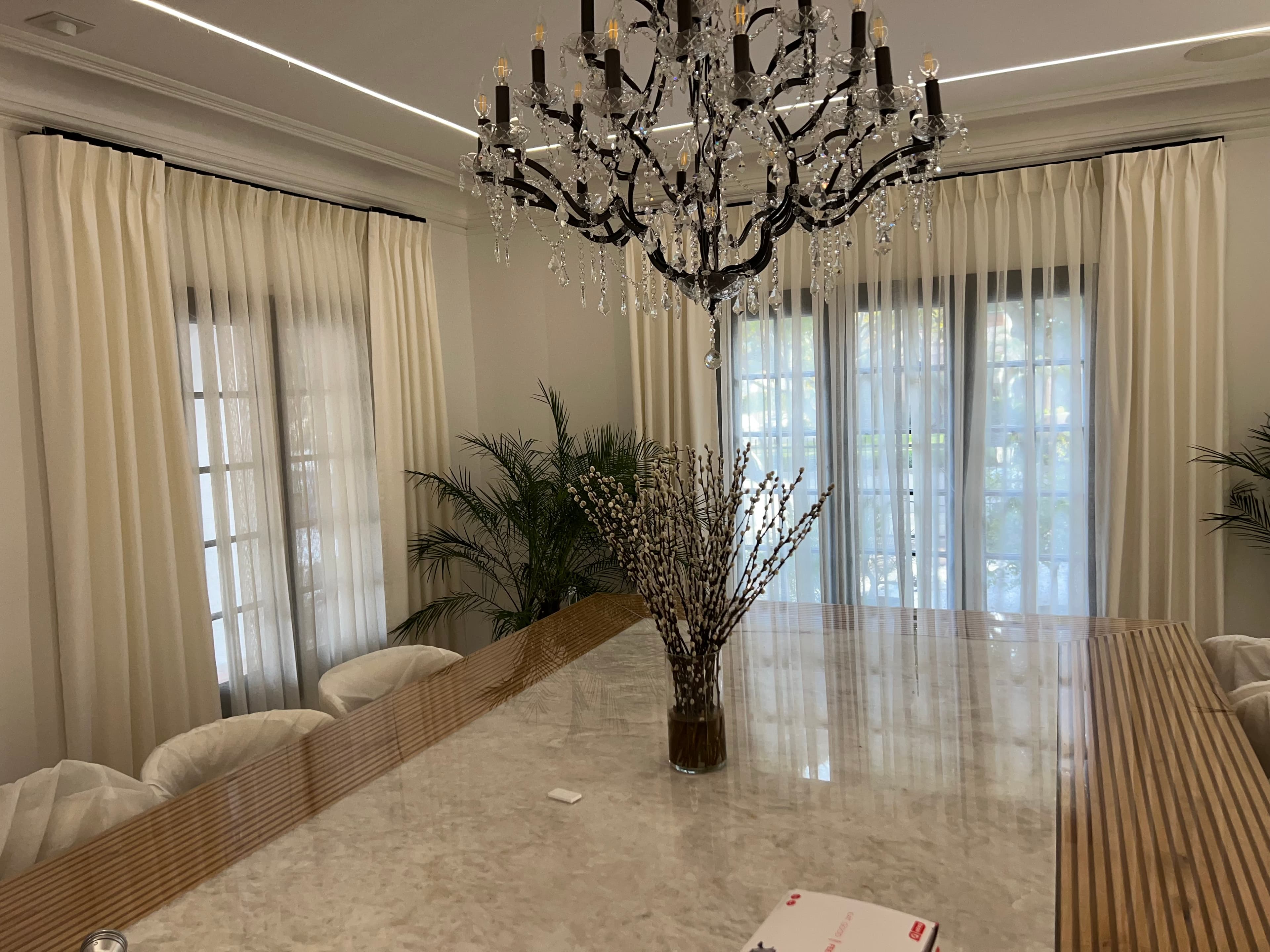
The three pleats we sew, compared
Pinch pleat gathers two, three, or five narrow folds into a group and tacks them together a few inches below the top edge, so they fan open above the stitch. It is the traditional heading and the most requested one in our workroom, sewn at 2.25x fullness. Three finger is the standard. Two finger suits lighter fabrics; five finger is the deep formal version that belongs with a heavy fabric in a dressed room.
Tailored pleat uses a single crisp fold per pleat, stitched flat down the face of the heading rather than pinched and fanned. Same 2.25x fullness, same buckram, same hardware options, but the top edge reads quieter and more architectural. This is the heading that has taken over contemporary work, because it gives you the discipline of a pleat without the decorative fingers.
Inverted pleat folds the pleat to the back of the panel, so the front face shows a smooth expanse of fabric broken only by a clean vertical seam at each pleat. Sewn at 2x to 2.25x. It is the flattest and most modern of the three, and the right choice when the fabric itself is the reason you are buying drapery.
All three take the same linings, the same fabrics, and the same hardware. Nobody has to choose a pleat for structural reasons. The choice is entirely about how much you want the top of the panel to speak.
Fullness and fabric, across all three
Fullness for pleated headings runs 2x to 2.25x the rod width. Below that the flat spaces between pleats sag and a closed panel looks thin. Above about 2.5x you are buying fabric that crowds the rod and stacks into a bundle wider than most windows have wall to hide it against. Add the return depth at each outside edge so the panel can wrap back to the wall, and add 16 to 20 inches per cut for hems and header.
Fabric wants body. Midweight linens and linen blends are the workroom default and take a pleat crisply. Velvets and wools give the deepest, most sculptural version and want interlining to keep the columns still. Very light or loosely woven fabrics can be pleated, but they need a lining behind them and usually a flatter heading, since a triple fold in a limp fabric collapses. Sheers are the one family we steer away from pleating; they do better at 2.5x to 3x with a softer top.
Choosing between them, room by room
Formal living and dining rooms take pinch pleat, usually three finger, in a fabric with some weight. Bedrooms go either way and mostly come down to the lining rather than the heading, since blackout is doing the real work. Contemporary open-plan rooms, the ones with big glass and not much trim, are tailored pleat territory. Rooms where a single beautiful fabric is the entire design want inverted pleat, so nothing interrupts the face.
Two practical constraints override taste. If the panels have to move by hand several times a day, put them on a traverse rod or track rather than rings, whichever pleat you choose. And if the run is very wide, wall-to-wall glass or a long slider, consider whether ripple fold would serve better; it is not a pleat in this sense, but it is the heading built for uniform waves across a long span. For casual rooms where a pleated header would be the most formal thing in sight, grommet or rod pocket headings are the honest answer.
Measuring and hardware
The measurement that catches people is length, because a pleated panel on rings hangs from the eye of the ring rather than from the rod, roughly an inch lower. Measure from there, then choose the hem: a half inch float, a kiss, or an inch or two of break. On a traverse rod or ceiling track the fabric starts closer to the hardware and the same panel would read long, so the hardware has to be settled before we cut. Our measurement tool returns panel width, length, rod size, and yardage; the length calculator settles rod height against your ceiling; and the measuring guide explains the rules behind both. If the panels are running the full height of the room, our floor to ceiling guide covers what changes at that scale, and custom drapery panels covers panel counts and widths.
Ordering, two ways
Anywhere in the US: send measurements and photos, choose from swatches we mail free, tell us your hardware, and we review the numbers before cutting. Sewing takes about three to four weeks and the panels ship rolled with the pins set. In Los Angeles and Ventura counties we do the whole thing ourselves, and both the measurement and the installation are free. You can see the headings side by side in the pleated drapery collection, and the Los Angeles drapery page covers the workroom on industry terms for designers and trade.
Frequently asked questions
What are pleated curtains?
Pleated curtains are panels whose top edge is folded into a repeating pattern of permanent folds, sewn over a stiff buckram band hidden inside the header. That band and those folds are what make the fabric fall in regular vertical columns instead of gathering randomly, and it is the difference between drapery that looks made and drapery that looks hung. The pleat style names the shape of the fold: pinch pleat groups two to five folds and tacks them together, tailored pleat uses a single flat fold, inverted pleat pushes the fold to the back so the front reads smooth. All of them hang from drapery pins, which is why they work equally well on rings, a traverse rod, or ceiling track.
How do you pleat curtains?
In a workroom, the pleats are calculated before anything is folded. We take the finished panel width, subtract the side hems and the returns, and divide what is left into an equal number of pleats separated by equal flat spaces, so the folds land four to six inches apart across the panel. Each pleat is then folded by hand against the buckram header, stitched down, and tacked into its final shape. There is a home version using pleater tape and four-prong hooks, and it works well enough for a light panel on a small window, though the tape has fixed pocket spacing so the pleats fall where the tape says rather than where the window wants them. That fixed spacing is the main reason taped panels look different from sewn ones.
How do you hang pleated curtains?
Push a drapery pin into the pocket behind each pleat, add one at each outside edge for the return, then hook every pin onto its ring, slide, or carrier. Work from one end to the other so the panel does not twist, and keep the outermost pin outside the bracket so the fabric can wrap back to the wall. Where you set the pin in the pocket controls how far below the hardware the fabric hangs, so hang the panel, look at the hem, and adjust the pin depth rather than reaching for the hem itself. Give the folds two or three warm days to settle after hanging; fabric has memory and the columns train themselves.
Do pleated curtains need a track or a rod?
Either works, and the choice is about how the panels will be used rather than what the heading requires. Rings on a decorative rod are the most common residential setup and the one that shows off the hardware, but they take a bit of effort to slide by hand. A traverse rod hides itself behind the header and moves the panels with a wand or cord, which suits drapery that closes every night. Ceiling track is what we specify for wall-to-wall runs, for panels that have to clear a shade underneath, and for motorization. The panel itself does not change; only the pins' destination does.
Which pleat style should I choose?
Start with how formal the room is and how much you want the heading to be noticed. Pinch pleat is the traditional decorative choice and the safest default, since a three finger pleat suits nearly every room and fabric. Tailored pleat gives you the same structure with a quieter, more architectural top, which is what most contemporary rooms want. Inverted pleat hides the fold behind the panel so the face reads as a flat expanse of fabric, and it is the right call when the fabric or the architecture is the point. If you cannot decide, tell us the room and the fabric and we will tell you what we would use.
How much fabric do pleated curtains need?
Plan on 2x to 2.25x the rod width in finished fabric, plus the return depth at each outside edge and 16 to 20 inches per cut for hems and header. A 60 inch rod at 2.25x therefore wants roughly 135 inches of finished width across the pair, and since drapery fabric runs about 54 inches wide, that pair gets seamed from three widths of goods with the seams hidden behind pleats. Patterned fabric needs more, because every seam and every panel has to land on the same point in the repeat. Our free measurement tool returns the yardage for your own window in a few seconds.