
Velvet is the fabric you choose when you want a window to have weight. Where linen filters and sheers glow, velvet absorbs: light, sound, the last of the afternoon heat. Hung at proper fullness with an interlining behind it, a velvet drape stands in deep, still columns that make a room feel finished the way a rug or a fireplace does. It's also the fabric most often ruined by shortcuts, because thin velvet on a skimpy rod at 1.5x fullness looks like a stage curtain from a school play. Custom fixes that. We cut cotton, viscose, and mohair velvets to your measurements in our made-to-order workroom, sew them with the linings that make velvet hang, and either install them in LA or ship them anywhere in the US.
What velvet is, and why it hangs the way it does
Velvet isn't a fiber; it's a construction. Two layers of cloth are woven face to face with a pile yarn running between them, then sliced apart, leaving a dense field of upright fibers on each half. That pile does everything. It catches light from one direction and swallows it from another, so a velvet panel reads as a different color on its folds than in its valleys. It has a nap, a direction the pile lies, and every panel in a room has to be cut with the nap running the same way or the pair will look like two shades of the same fabric. And the pile adds weight and depth that make velvet fold in wide, soft columns rather than sharp creases. That weight is the point and the cost: a lined, interlined velvet pair can weigh forty pounds, which changes what hardware you need.
Cotton, viscose, mohair, and the performance velvets
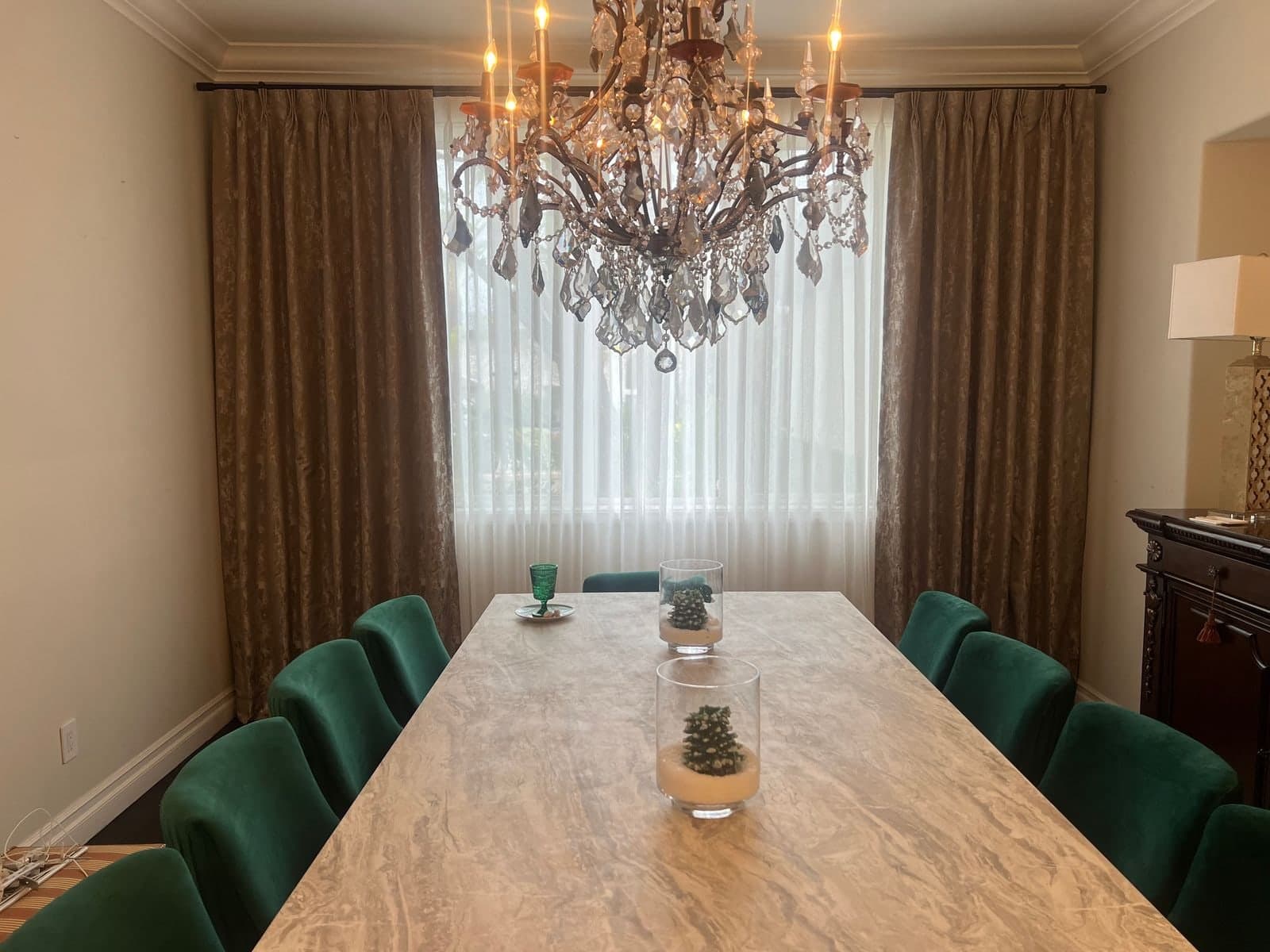
Cotton velvet is the workroom's default: matte, dense, crisp at the fold, with a slightly dry hand that suits both traditional and modern rooms. Viscose and silk-blend velvets have a longer, glossier pile that catches light like water; they're the glamorous version, slightly more delicate, and they show every finger mark until brushed. Mohair velvet, woven from Angora goat hair, is the aristocrat, springy and nearly indestructible, with a low luster that ages beautifully; it's also the most expensive of the group. Polyester and performance velvets have improved enormously and now hold their own in family rooms and rentals, with a crushed or plain pile that resists sun and cleans up with a damp cloth, at some loss of depth. Our line covers all four, and the mill houses we work with, Kravet, Schumacher, and Robert Allen among them, carry cotton velvets in more than a hundred colors. Swatches first, always: velvet photographs badly and needs to be seen in your light.
Interlining, or the difference between velvet and great velvet
Every velvet drape we sew for a living or dining room gets an interlining, and here's why. Velvet has weight but not stiffness; on its own it can slump at the header and pull thin over a long drop. A flannel interlining sandwiched between the face and the lining gives the panel a soft skeleton: the folds fill out, the columns stay round from header to hem, and the whole panel looks upholstered rather than hung. It's the construction behind the hotel drapery look and the grand houses it borrowed from, and it's how a moderately priced cotton velvet ends up looking like a far more expensive one. Interlining also doubles the panel's insulation and deadens sound, which is why velvet ends up in media rooms and on the street side of Hancock Park houses. Skip it only for lightweight velvets in casual rooms, or when the budget honestly can't stretch.
Fullness and the headers that suit it
Velvet needs less fullness than light fabrics because the pile carries so much body. We sew most velvet at 2x to 2.25x; pushing to 2.5x mostly buys bulk on the rod and a stack that eats the wall. The header should have structure. A pinch pleat is the classic velvet heading and what most people picture; a tailored pleat gives velvet a cleaner, more modern spine, and both live on our pleated drapery page. Ripple fold on a track turns velvet into even architectural waves and is the right choice for a wide wall or a track that motorizes. Grommets work in the lighter cotton and performance velvets and give a relaxed, loft-style read. The one header we won't put on a heavy velvet is a rod pocket; the fabric bunches instead of gathers and won't slide.
Hardware has to be sized for the load: a one and a quarter inch steel rod or a track with a center support every four feet, and brackets anchored into studs or solid blocking, not drywall anchors. Where linen forgives a light rod, velvet punishes it. Put your rod width and drop through the measurement tool and you'll have the panel width, yardage, and a fabric-weight note before you call us.
Light, heat, and the blackout question
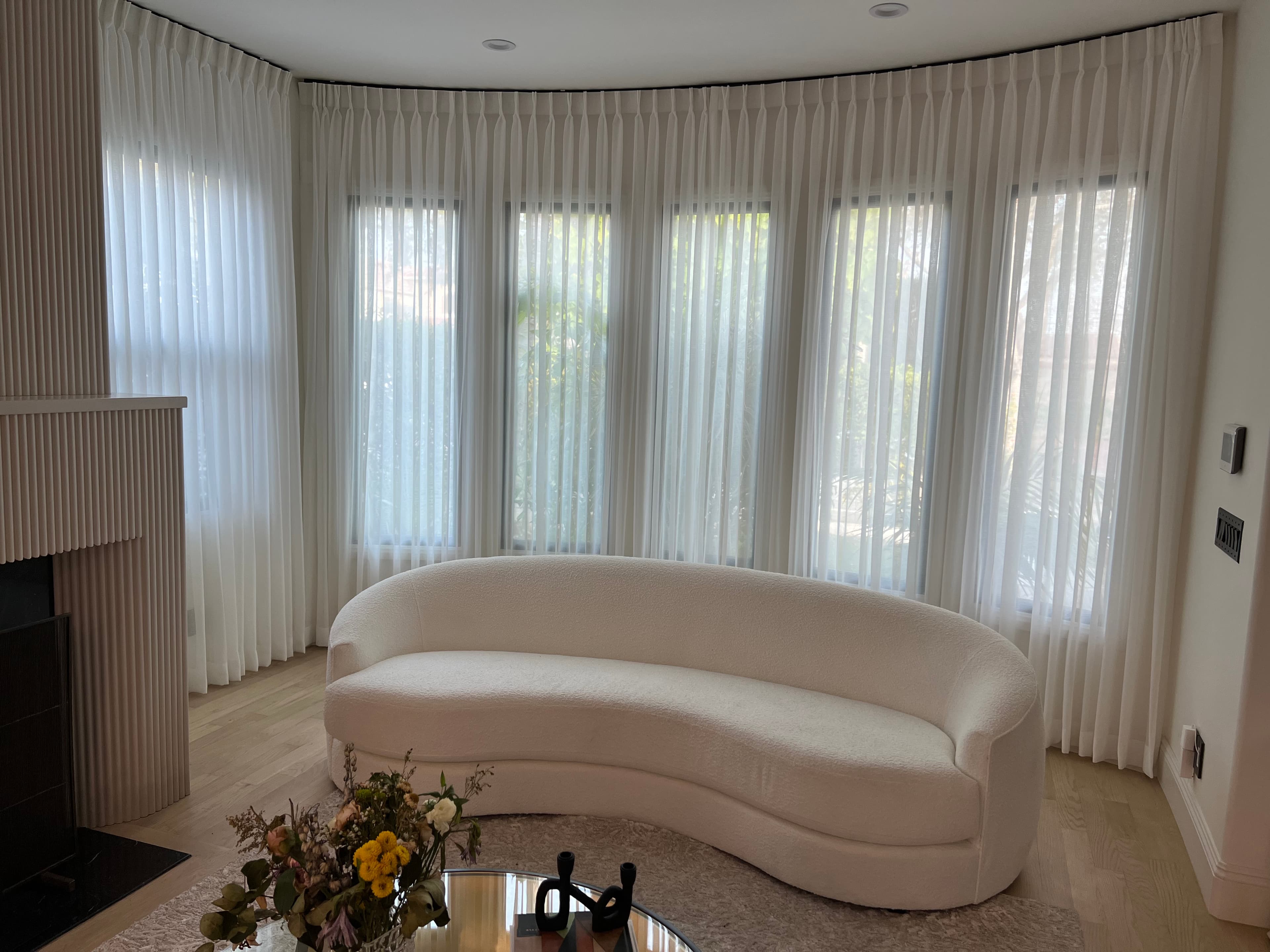
An interlined, lined velvet drape blocks more light than almost anything short of a true blackout lining, and for most bedrooms it's dark enough. If dark enough isn't the brief, we sew a 3-pass blackout lining behind the interlining, and the room goes black while the face still reads as velvet; the edge details that finish the job are on our custom blackout curtains page. Velvet is also the best drapery fabric we have for heat. The pile and the interlining together trap a layer of still air against the glass, which keeps a west-facing room in Sherman Oaks cooler in August and a single-pane Craftsman warmer in January. Sun fades velvet like it fades everything, viscose faster than cotton, so unlined velvet on a south window is a mistake we'll talk you out of. Lined and interlined, it lasts for decades.
Care and living with velvet
Velvet asks for one habit: brush it. A soft clothes brush run with the nap every few months lifts dust and restores the pile where it's been pressed by a hand or a chair back. Vacuum on low with the brush attachment for the rest. Our velvet panels are sewn for dry cleaning, and once every few years is plenty. Creases from shipping steam out easily, and that's the only time a velvet drape should meet a steamer or an iron; never press velvet flat, because crushed pile doesn't come back. Pets and velvet get along better than people fear, since the dense pile releases fur to a brush, but cats will climb it, and we've seen the evidence.
A recent velvet order
A dining room in Pasadena, a 1920s Spanish house with a 10 foot ceiling and a pair of arched windows flanking a fireplace. The owner wanted the room to feel like a restaurant at night. We sewed four panels of a deep bottle green cotton velvet at 2.25x fullness, interlined and sateen lined, pinch pleated on a bronze rod mounted just under the ceiling, cut to a one inch break; the math for rooms that tall is on our floor to ceiling curtains page. Forty-one pounds of drapery, and the room went from echoey to hushed the afternoon they went up.
Ordering, two ways
From anywhere in the US: measure with our guide, send numbers and photos, and we review before cutting. We send swatches free and insist on them with velvet. Panels ship rolled, never folded, in three to four weeks, with hanging notes that cover the hardware. In Los Angeles and Ventura counties, the measurement and the installation are free, which matters more with velvet than with anything else we sew; forty pounds of drapery on the wrong bracket is a Saturday you don't want. Designers specifying velvet for clients will find the trade side of the workroom on our drapery in Los Angeles page.
Frequently asked questions
How do you wash velvet curtains?
You don't, at least not in a washing machine. Velvet's pile crushes when it's wet and agitated, lined panels shrink unevenly, and a viscose velvet can lose its luster for good. Our velvet drapery is sewn for professional dry cleaning, which most clients need once every few years. Between cleanings, a soft brush run with the nap and a low-suction vacuum with the brush attachment keep the pile clean and lifted. For a spill, blot with a barely damp white cloth, never rub, and let it dry before brushing the pile back up.
Can you steam velvet curtains?
Yes, and steam is the right tool for velvet, as long as the steamer head never touches the fabric. Hang the panel, work from the back where you can, and hold a handheld steamer an inch or two away, moving steadily downward; the steam relaxes the fibers and the pile lifts on its own. Steaming from the front is fine for cotton velvet if you keep the distance and then brush the pile with the nap. Don't iron velvet flat, because pressure crushes the pile and leaves a permanent shine.
How do you get creases out of velvet curtains?
Most creases from shipping or storage fall out within a week of hanging, because velvet is heavy and the weight does the work. For a stubborn crease, steam from the reverse side with the panel hanging, then brush the pile with the nap once it's dry. A hot shower's steam in a closed bathroom works in a pinch for a single panel. What won't come out is a crease that's been pressed flat under heat, which is why we ship velvet rolled and never folded.
Are velvet curtains blackout?
Nearly, and fully if you ask. A lined and interlined velvet drape blocks most light on its own, enough that many bedrooms need nothing more. For true blackout, we sew a 3-pass blackout lining behind the interlining, which stops light through the fabric entirely; the light that remains comes around the edges, so we widen the coverage past the frame and add a wraparound return. The room side still looks and feels like velvet. Tell us how dark you need it and we'll build to that.
Are velvet curtains good for summer?
Better than people expect, especially in a hot climate. Velvet's pile and interlining trap still air against the glass, which slows heat coming in as much as it slows heat going out; a lined velvet drape on a west window keeps an afternoon room noticeably cooler when it's drawn. The tradeoff is visual: velvet reads as a winter fabric, and a room full of it can feel heavy in July. The usual answer is to pair velvet drapery with a sheer or solar shade behind it, so the velvet frames the window most days and closes only against the worst of the sun.
Are velvet curtains in style?
Yes, and they have been for roughly four hundred years, which is the best argument that they'll stay that way. What changes is the color and the header. Right now the demand runs to saturated jewel tones and dusty neutrals in cotton velvet, with tailored pleats or ripple fold instead of swags and tiebacks. A plain velvet panel at proper fullness reads as modern in a white room and traditional in a paneled one. Choose the color for your room, not for this year, and it will outlast the trend either way.