
Linen is the fabric people picture when they say the word curtain, and it's the one our workroom cuts more of than anything else. The reasons hold up. It hangs with a relaxed straightness nothing synthetic quite copies, it takes color the way plaster takes paint, and it looks correct in a Craftsman in Pasadena and a glass box in the hills alike. It also wrinkles, shrinks if handled carelessly, and comes in weights that behave like three different fabrics. Custom is where those quirks get managed instead of endured: the right weight for the window, the right lining for the exposure, the hem sewn after the fabric has settled to its true length. Every panel is cut to your measurements in our made-to-order workroom, and the sewing is the same whether we install it in LA or ship it to your door.
Why linen earns the top spot
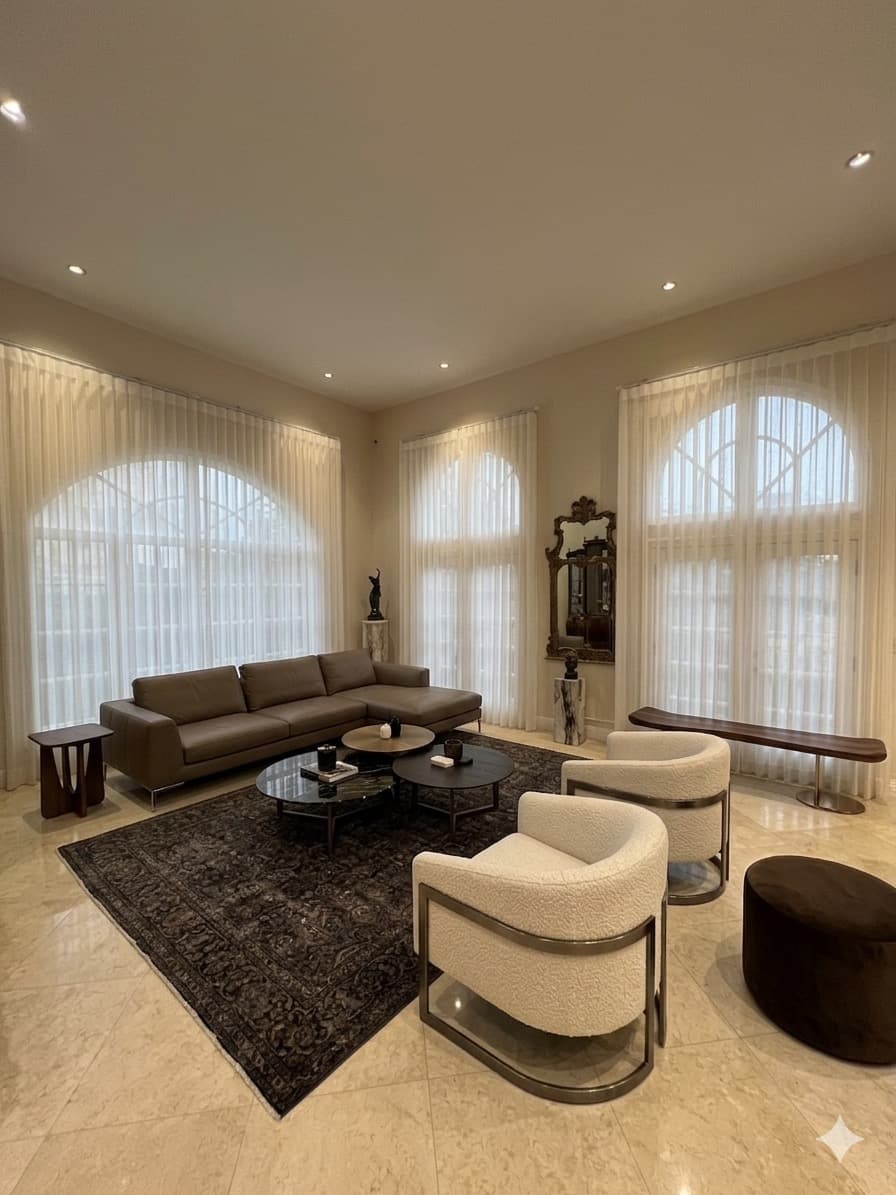
Linen is spun from flax, and flax fibers are long, hollow, and slightly irregular. That structure is the whole story. The length gives the yarn strength, so a linen drape outlasts most cottons. The hollowness lets it breathe and wick, which is why linen bedrooms feel cooler in August. And the irregularity is where the slubs come from, the small thick spots in the weave that catch light and keep a plain panel from looking flat. Under strong California sun, a washed oatmeal linen changes character three times a day: chalky at noon, warm at four, almost silver at dusk. Polyester "linen look" fabrics try to print that texture on; the real fiber has it built in, and you can tell from across the room.
It's also a forgiving fabric to live with. It doesn't hold static, so it doesn't collect dust the way synthetics do. It softens with every year instead of pilling. And when you eventually want a different color, a natural fiber can be dyed; a blend usually can't. If velvet is the fabric you choose for weight, linen is the one you choose for light.
Weights and weaves, and what each does on the window
Linen comes in weights the way denim does, and the weight decides how the panel hangs. Sheer and handkerchief linens (around 3 to 5 ounces per yard) filter light into a soft glow and read as mist at 2.5x to 3x fullness; unlined, they're a privacy screen in daylight and not much of one at night. We build them as custom sheer curtains in their own right. Midweight linens and linen blends (6 to 9 ounces) are the workroom's default drapery weight: enough body to hang straight, enough give to fold softly at the header, and lined, this is the panel most living rooms want. Heavy and upholstery-weight linens (10 ounces and up) hang like a wool coat, with deep, still folds; they suit tall rooms and formal headers and want interlining to look their best.
Weave matters too. A plain weave is crisp and slightly transparent; a basketweave is denser and more textured; a linen-cotton blend wrinkles less and costs less, at some loss of that particular slubbed light. Belgian linens, the flax grown and woven in Belgium and northern France, are the benchmark for evenness and hand, and most of what we recommend at midweight comes from those mills or from houses like Kravet and Schumacher. Washed linens have been pre-shrunk and softened at the mill, which changes both the hang and the shrink question below.
Lining, from luminous to blackout
Linen and lining is a genuine tradeoff, not a default. Unlined linen is the most beautiful version of the fabric: light comes through the weave, the slubs glow, and the panel moves. It's also the version that fades fastest on a west-facing window and offers the least privacy after dark. A cotton sateen lining keeps the face fabric protected, gives the street side a uniform look, and adds enough body that a midweight linen hangs like a heavier one. Blackout lining, a 3-pass coated layer sewn behind the linen, turns a bedroom dark while the room side still reads as soft linen instead of a hotel panel. And an interlined build, with a flannel layer sandwiched between face and lining, gives linen the upholstered, still hang you see in English country houses and the better Brentwood traditionals, plus real insulation on single-pane glass.
Our usual advice: unlined for sheers and for rooms where the glow is the goal; sateen lined for most living and dining rooms; blackout lined for bedrooms; interlined when the room is tall, formal, or cold. We'll tell you when the cheaper option is honestly enough.
Fullness and the headers linen likes
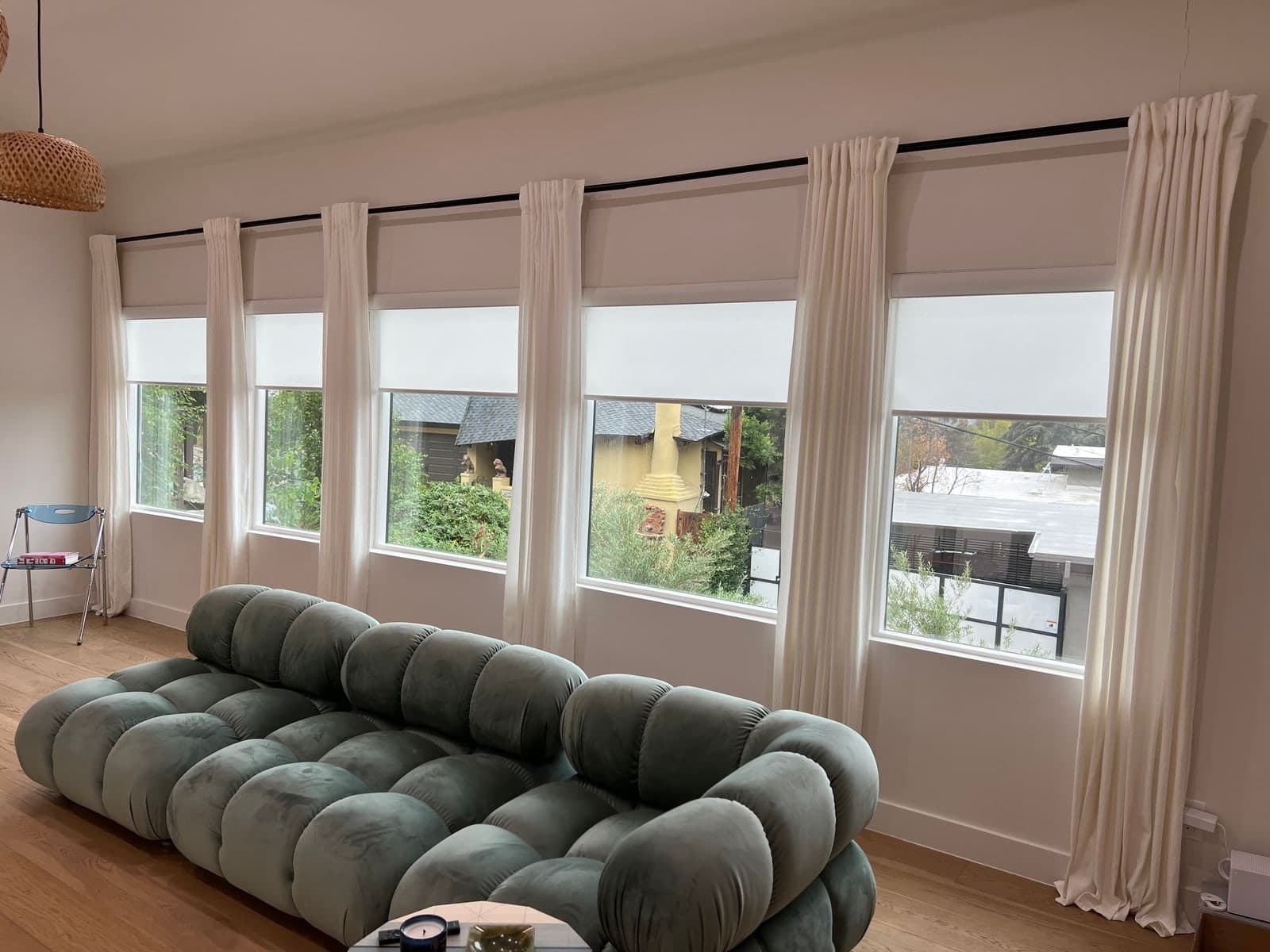
Linen rewards generosity. At 1.5x fullness, the ready-made standard, a midweight linen looks like a bedsheet on a rod; at 2x to 2.5x it turns into columns. For sheer linens we go to 2.5x or 3x, because a light fabric needs more of itself to read as full. Linen is the natural partner for the relaxed headers. A rod pocket in washed linen is the classic California casual look, gathered and unfussy. Grommets give linen deep, even columns and slide easily, good for a slider you open every day. Ripple fold on a track turns midweight linen into a wall of even waves, the most modern reading of the fabric. And a pinch or tailored pleat gives linen a spine, which is how you make a linen drape look formal in a dining room without changing fabric. The one header we steer linen away from is a tight, stiff pleat in a heavy weight without interlining; linen wants to fold, not stand. Run your rod width through the measurement tool and the fullness math comes back in seconds.
Sun, care, and the wrinkle question
Sun is linen's only real enemy. Unlined linen on a south or west window will lighten noticeably in two or three summers, and a hard LA exposure can weaken the fibers along the leading edge over a decade. Lining solves most of it, and a solar or sheer shade behind the drape solves the rest. Care is simpler than people expect. Our panels are sewn for dry cleaning, which keeps the finished length honest; a washed linen that's been pre-shrunk can be gently machine washed cold if it's unlined, but the hem may move a quarter inch, and lined panels should never see a washing machine, because face fabric and lining shrink at different rates. Vacuum with the brush attachment a few times a year and most linen never needs more.
As for wrinkles: linen creases, and the creases from shipping fall out within a few days of hanging, helped along by a garment steamer. What doesn't fall out is the character. A linen that stays perfectly flat isn't linen, and the clients who love the fabric most are the ones who stopped fighting it.
Rooms and seasons
Linen is a year-round fabric in Los Angeles and a warm-season favorite everywhere else. In a Santa Monica living room it's a breeze filter; lined, it's the same panel in a Minneapolis January, and interlined it's genuinely insulating. Bedrooms take linen with blackout lining more often than any other build we sew. Kitchens and baths get sill-length linen cafes, unlined, so they can be washed. Dining rooms are where heavy linen with a pleated header earns its price. The lighter, unlined side of this work is most of what we make as custom curtains in Los Angeles. And the one place we talk people out of linen is a bathroom with a shower and no fan, where the fiber's love of moisture turns into mildew.
A recent linen order
A couple in Austin sent photos of a 1950s ranch with nine foot ceilings and a bank of three windows across the back wall. They wanted the LA look and had been quoted stock panels that would have stopped four inches short of the floor. We sewed six panels of midweight Belgian linen in a warm flax color at 2.25x fullness, ripple fold on a single ceiling track, sateen lined, cut to a 105 and a half inch float; the size math for nine foot rooms lives on our 96 inch curtains page. They hung them on a Saturday. The photos they sent back looked like a different house, and the only thing that had changed was the numbers.
Ordering, two ways
Anywhere in the US: measure with our guide, send dimensions and photos, and we review before cutting. Panels ship rolled in three to four weeks. We send linen swatches free, and we insist on it, because a screen can't show you the weight of a fabric or how it takes your light. In Los Angeles and Ventura counties, the measurement and the installation are free; we bring the swatches to your window.
Frequently asked questions
How do you wash linen curtains?
Carefully, and only if they're unlined. A pre-washed linen panel with no lining can go through a gentle cold cycle and a low tumble or a line dry, with the understanding that the hem may move a quarter inch and the pressing will need redoing. Lined linen, which is most of what we sew, should be dry cleaned, because the face fabric and the lining shrink at different rates and a washing machine will pucker every seam. Between cleanings, a vacuum with the brush attachment and an occasional pass with a steamer handle dust and creases. Most of our clients dry clean every few years and steam in between.
Should linen curtains be lined?
For most rooms, yes, and the lining you choose is the real decision. Unlined linen is beautiful and luminous, but it fades on sunny exposures and gives you little privacy after dark. A cotton sateen lining protects the fiber, adds body so the panel hangs straighter, and keeps the street side of your windows uniform. Blackout lining turns a linen bedroom dark while the room side stays soft. Leave linen unlined when the fabric is a sheer, when the glow is the whole point, or when you want to machine wash it; line it everywhere else.
Are linen curtains see through?
It depends on the weight and the time of day. Sheer and lightweight linens are see-through in daylight to the point that shapes read as shapes, and at night with the lights on inside they show more than most people expect. Midweight linens give daytime privacy but still silhouette figures after dark. Adding a lining ends the question: a sateen-lined linen panel is opaque from outside, day or night. If you love the light through an unlined linen, the usual answer is a sheer or solar shade behind it for the evenings.
Do linen curtains shrink?
Untreated linen can shrink 3 to 5 percent when washed, which on a 96 inch panel is up to four inches, so yes, and the workroom plans for it. We steam or pre-shrink fabric before cutting and sew the hem to the fabric's settled length, which is why our panels arrive at the number you ordered. Washed linens have already been shrunk at the mill and move much less afterward. The rule for living with them: dry clean lined panels, wash only what was sewn to be washed, and if you ever do wash an unlined panel, expect the hem to rise a little the first time.
How do you get wrinkles out of linen curtains?
Hang them and wait; most shipping creases fall out within a few days under the fabric's own weight, and warm, slightly humid days speed it up. A handheld garment steamer takes care of the rest: work top to bottom with the panel hanging, keeping the steamer head an inch off the fabric. Ironing works too, on the reverse side with the linen setting and a damp cloth, but it's a lot of fabric to wrestle. What you shouldn't try to remove is the soft, all-over crumple that linen develops; that's the fiber's texture, not damage, and pressing it perfectly flat makes linen look like polyester.
Are linen curtains good?
For most windows in most homes, linen is the best all-around drapery fabric there is, which is why it's the fiber we cut more of than any other. It hangs beautifully, breathes, lasts for decades, takes color well, and looks right in nearly every style of house. Its weaknesses are honest and manageable: it wrinkles, it fades if left unlined in hard sun, and the good stuff isn't cheap. If you want a drape that looks pressed and perfect every day of its life, choose a polyester blend; if you want one that looks better every year, choose linen.